The Real Home Survey Cost Most People Do Not Expect
When people budget for a home purchase, the home survey cost rarely makes the list until the last minute. It gets lumped in with closing costs and treated as just another line item. But the real cost of a home survey is not just the fee you pay upfront. It is what you risk paying later if you skip it or rush through it without understanding what you ordered.
What a Home Survey Is Actually Checking
A home survey is not the same as a home inspection. A home inspection looks at the condition of the structure, the roof, the plumbing, and the systems inside the building. A survey looks at the land itself.
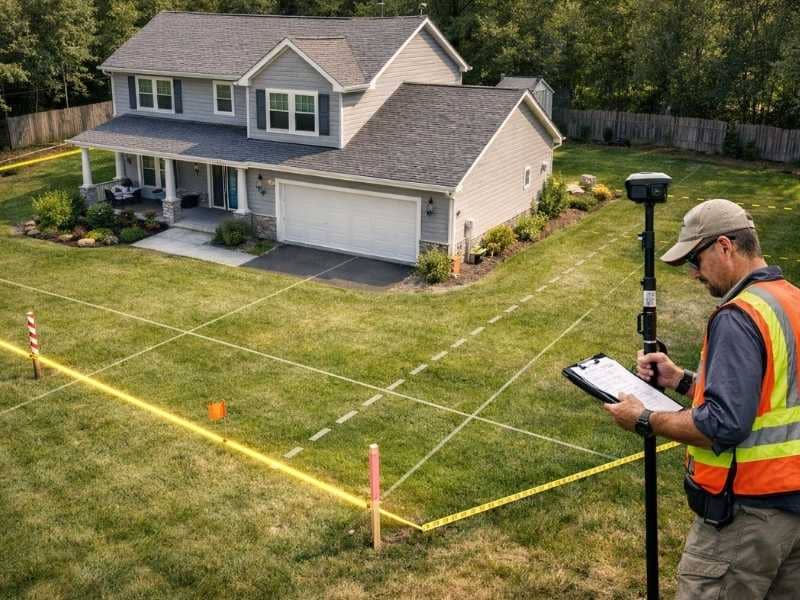
A licensed surveyor will locate the legal boundaries of the property, identify any encroachments, flag easements that cross the lot, and confirm whether the structures on the property sit where they are supposed to sit legally. These are things a home inspection will never catch, and they can have a serious impact on what you are actually buying.
The Upfront Fee Is the Smaller Number
Most homebuyers focus on the survey fee, which for a standard residential property typically falls between $500 and $1,500. That number feels significant in the middle of an already expensive transaction, and some buyers look for ways to skip it or accept an older survey from the seller instead.
That decision can be costly. Here is why.
When an Easement Changes Everything
An easement is a legal right that allows someone else to use a portion of your property for a specific purpose. Utility companies, municipalities, and even neighboring landowners can hold easements that run across a lot. They are attached to the land, not the owner, which means they transfer automatically when the property sells.
If an easement cuts through the area where you planned to build a garage, fence, or addition, you may not be able to build there at all. A current survey will show you where those easements are before you close, not after.
When a Structure Is in the Wrong Place
Setback violations are more common than most buyers expect. A shed, a fence, or even part of a home addition can cross a property line or sit inside a required setback zone without anyone realizing it. When that happens, the problem belongs to whoever owns the property at the time it is discovered.
Buying without a current survey means you could inherit a violation that costs thousands of dollars to resolve, or that creates legal conflict with a neighbor down the road.
When the Boundaries Are Not Where the Seller Thinks
Property lines are not always where people assume they are. Fences get put up in the wrong place. Driveways drift over the years. Neighbors make informal agreements that never get recorded legally. A survey puts the actual legal boundary on paper so there is no ambiguity about what you are purchasing.
The Cost of Not Getting One
Title insurance covers some ownership risks, but it does not cover everything a survey would catch. Most standard title policies specifically exclude survey-related issues unless a current survey is provided. That means encroachments, boundary overlaps, and certain easement problems may not be covered if a problem surfaces later.
The gap between what title insurance covers and what a survey catches is where buyers tend to get hurt financially.
What to Look For in a Home Survey Quote
Not every survey is the same product. When you receive a quote, confirm what type of survey is being done and what it includes. For a home purchase, you generally want a survey that:
- Locates and marks all property corners
- Identifies easements shown in the public record
- Notes any visible encroachments on or from the property
- Produces a certified plat or drawing you can give to your title company
If the quote does not include all of these elements, ask why before you proceed.