
↓
 

Colorado Springs Land Surveying

Local Land Surveyors in Colorado Springs, CO

Colorado Springs Land Surveying
  • Home
  • ALTA Survey
  • Boundary Surveying
  • Construction Survey
  • Drone LiDAR Mapping
  • Elevation Certificate
  • Land Surveying
  • Topographic Survey
  • Blog
  • Contact Us
Home - Page 2 << 1 2 3 4 … 8 9 >>

Post navigation

← Older posts
Newer posts →

Why Hillside Lots in Colorado Springs Make Topographic Surveys More Important Than Owners Realize

Colorado Springs Land Surveying Posted on June 19, 2026 by ColoradoSpringsSurveyorJune 21, 2026
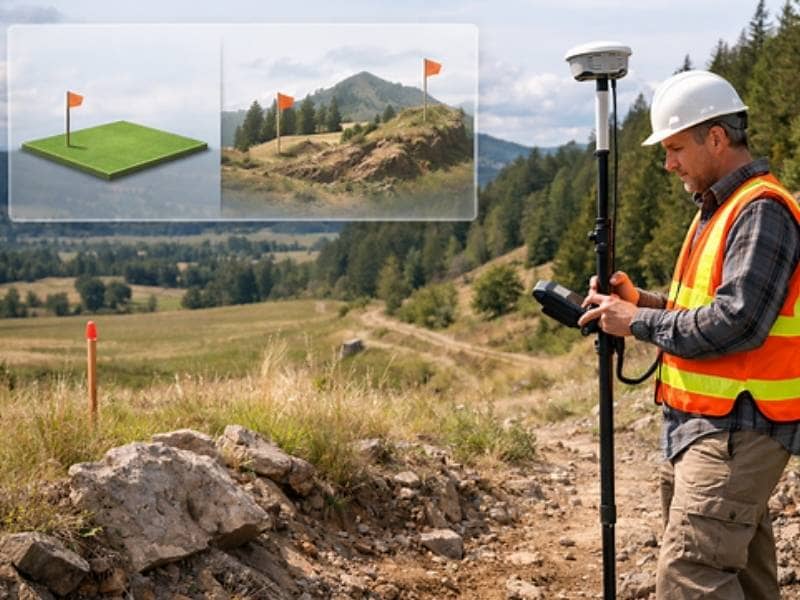
Surveyors collecting elevation data on a steep hillside property in Colorado Springs to support topographic survey planning.

Colorado Springs sits where the plains meet the Rockies. That gives hillside buyers something flat-lot owners never get, a view that stretches for miles. The same slope that creates the view also creates conditions a flat lot never has to deal with. A topographic survey maps those conditions before a shovel touches the ground. It shows how the land rises, falls, and drains across the property. Owners who skip this step often learn the hard way that a beautiful lot and a buildable lot aren’t always the same thing.

Why Colorado Springs Terrain Creates Different Challenges From Flat Lots

A flat lot rarely surprises a builder. The ground sits at one elevation, and water moves in predictable directions. Hillside parcels in Colorado Springs work differently, since the ground itself can shift in shape from one corner of the lot to the other.

Foothill terrain along the Front Range can change twenty or thirty feet in elevation across a single lot. That affects where a house can sit, how a garage connects to the street, and how much yard space stays usable once grading limits apply. A topographic survey turns those unknowns into real numbers. It maps the land so an owner can see its true shape instead of guessing from a walk-through. This matters most before design begins, not after, because changing course once a floor plan is set gets expensive fast.

Water Always Follows the Slope, Whether Owners Plan for It or Not

Water doesn’t care about property lines or building plans. It just moves downhill. Summer storms in Colorado Springs can drop heavy rain fast. On a sloped lot, the direction water travels can decide whether a foundation stays dry or a basement floods.

A topographic survey shows exactly where the high points and low points sit on a property. That tells an owner how runoff will behave once construction disturbs the ground. Without it, a homeowner installing a driveway or a patio is really just guessing which way water will run after the slope gets reshaped. Put a retaining wall in the wrong spot, and water that used to spread out across open ground can push against a foundation wall instead. Builders use this elevation data to plan drains and grading that move water away from structures. Skipping that step doesn’t make the water disappear. It just lets the slope decide where the water goes.

Views and Building Sites Rarely Compete for the Same Space

Most buyers choose a hillside lot in Colorado Springs for one reason, the view. A ridge line or a clear sightline toward Pikes Peak can sell a property before a buyer even checks the soil. The trouble is that the best view and the easiest place to build are often two different spots on the same lot.

A steep ridge edge might offer the most dramatic scenery. That same edge can come with grading limits or drainage paths that make construction there difficult. A topographic survey separates the buildable area from the scenic high points, so a designer can see where the two overlap and where they don’t. This often changes how a house gets placed, sometimes pulling it back from the slope’s edge to protect both the view and the structure. A deck or a window wall can often capture most of a view without putting the foundation itself in a risky spot.

Elevation Changes Influence More Than the House Itself

A house footprint is only part of what a slope affects. Driveways on hillside lots need a workable grade for everyday use. Colorado Springs winters make that even more important, since ice and snow can turn a steep driveway into a daily hazard. Walkways, patios, and outdoor living spaces all answer to the same elevation changes that shape the home’s foundation.

A topographic survey gives designers the numbers they need to plan around several things tied directly to the slope.

  • Driveway grade and turning room near the street
  • Patio and deck placement relative to the slope
  • Access paths to the lower or upper portions of the lot
  • Retaining wall height and placement where grade changes sharply

Landscaping runs into the same questions. A planting bed that looks fine on flat ground can wash out completely on a slope without the right grading underneath it. Even reaching the back corner of a hillside lot on foot can become a design problem if the survey isn’t part of the planning from the start.

Topographic Surveys Help Designers Work With the Land Instead of Against It

Architects and engineers who work on hillside lots in Colorado Springs rely on topographic data the same way a tailor relies on measurements. The plan only fits well when the numbers are accurate. Contour lines and slope percentages give a designer the real shape of the property before a single line gets drawn on a floor plan.

Working with the land usually means less grading, not more. A house that follows the natural contour of a slope often needs less excavation than one that fights against it. That difference shows up directly in cost. Builders who start with accurate topographic data can plan foundations, walls, and drainage as one connected system. They don’t have to solve each problem on its own mid-build. The lots that turn out best on Colorado Springs hillsides are usually the ones where the design worked with the terrain, not against it.

Frequently Asked Questions

Why are topographic surveys especially useful for hillside properties?

Hillside properties have elevation changes that flat lots don’t. Those changes affect drainage, access, and where a home can sit. A topographic survey records the exact shape of the land, so builders work from real information instead of a guess.

Can a topographic survey help with retaining wall planning?

Yes. Elevation data shows where the grade changes sharply enough to need a wall instead of a simple slope. Engineers use that information to decide how tall a wall needs to be and where it should go. Getting this right early helps avoid costly redesigns later.

Why do sloping lots require more planning than flat properties?

Flat lots rarely raise questions about drainage or usable space, since the ground stays consistent. Sloped lots bring up all three at once, because water runs differently and not every part of the lot is easy to build on. That means a sloped lot needs more groundwork before design decisions get locked in.

Do topographic surveys show how water moves across a property?

Yes. A topographic survey records elevation points across the lot, and those points reveal which direction water will travel during a storm. Designers use that data to plan drainage and grading that keep water away from foundations and outdoor spaces.

Who typically uses the information from a topographic survey?

Architects, engineers, and builders rely on topographic surveys to design homes that fit the property’s real terrain. Landscape designers use the same data to plan grading and outdoor spaces that hold up over time. Owners benefit too, since the survey shows what their lot can realistically support before construction begins.

Posted in topographic survey | Tagged Topographic Survey

How Much Does a Boundary Survey Price Run These Days?

Colorado Springs Land Surveying Posted on June 12, 2026 by ColoradoSpringsSurveyorJune 5, 2026
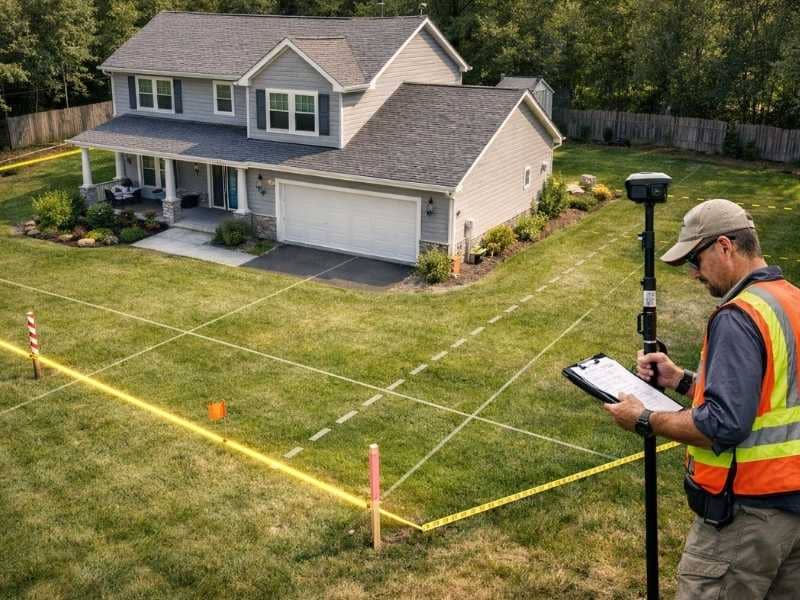
Homeowner reviewing property plans with a licensed surveyor while discussing boundary survey price for a residential property

The boundary survey price question comes up constantly, and the answer is never a single number. Most people hear a figure from a neighbor or find a range online and assume that is what they will pay. Then they get their own quote and wonder why it looks different. This article explains how boundary survey pricing actually works and what is reasonable to expect.

What a Boundary Survey Actually Does

A boundary survey establishes the legal edges of a piece of land. A licensed surveyor researches the property records, goes out to the site, locates or sets physical markers at the corners, and produces a certified document showing exactly where the property begins and ends.

It is the only survey type that creates a legally defensible record of where your property lines sit. That distinction matters when you are dealing with permits, disputes, sales, or any kind of construction near the edges of your lot.

What the Price Range Looks Like in Colorado Springs

For a standard residential lot in Colorado Springs, a boundary survey typically costs between $500 and $1,500. Rural properties, larger parcels, and lots with complicated histories tend to sit at the higher end or above it.

That range reflects the minimum scope of a clean, straightforward job. Properties with complicating factors can push the price higher, and understanding those factors helps you interpret any quote you receive.

What Pushes a Boundary Survey Price Higher

The Number of Corners

Every corner of your property has to be located in the field and tied back to the legal description. A four-corner rectangular lot is the simplest possible job. Properties with multiple angles, irregular shapes, or curved boundaries have more corners to establish, and each one adds time.

How Much Research the Job Requires

A boundary survey always starts with a records search. The surveyor pulls the deed, reviews prior surveys, checks adjoining parcels, and builds a legal picture of the property before any fieldwork begins. If prior surveys exist and records are consistent, that phase moves quickly. If there are gaps, contradictions, or a long chain of ownership without clear documentation, the research alone can add several hours to the job.

Whether the Original Corners Are Still There

When monuments set by a previous survey are still in the ground and in good condition, the field crew can work from them efficiently. When they are gone, buried, or disturbed, the surveyor has to re-establish those points through calculation and additional fieldwork. That takes more time and raises the final price.

Rural Location and Site Conditions

Properties on the outskirts of Colorado Springs or in the surrounding El Paso County area often involve longer drive times, less accessible terrain, and fewer nearby reference points for the crew to work from. All of those factors add time, and time is the primary cost driver in any boundary survey.

When You Actually Need a Boundary Survey

Not every situation calls for a boundary survey, but several common ones do.

You need one when you are selling or buying property and the transaction requires a current survey. You need one when you plan to build anything near the edges of your lot and want to confirm you are within your legal boundaries. You need one when a fence line, driveway, or structure on a neighboring property appears to be crossing onto your land. You also need one when a lender or title company requests it as a condition of closing.

If you are simply curious about where your lot ends and the neighbor’s begins, a boundary survey is the right tool. A conversation or an old plat is not a substitute for a certified, stamped document.

What You Get When the Survey Is Done

At the end of the process, you receive a survey drawing that shows your property’s legal boundaries, the location of corners, any encroachments or easements identified during the research phase, and the surveyor’s stamp and certification. That document is what gets used by title companies, attorneys, lenders, and permit offices.

Keep it on file. Future owners of the property, your own future projects, and any legal questions that come up later will benefit from having it accessible.

Frequently Asked Questions

Why does my boundary survey quote look higher than what I found online?

National price averages are based on data from across the country and reflect conditions in flat, heavily surveyed areas where records are clean and fieldwork is simple. Colorado Springs sits in more varied terrain, with older rural parcels and properties that sometimes have complicated ownership histories. Local pricing reflects local conditions, not national averages.

Is a boundary survey the same as a property survey?

The terms are often used interchangeably, but they are not always the same thing. A boundary survey specifically focuses on establishing legal property lines. A property survey is a broader term that can refer to several different products depending on who is using it. When requesting a quote, always ask what type of survey is being proposed and what it will document.

Do I need a new boundary survey if one was done ten years ago?

It depends on what has changed. If structures have been built, fences have been moved, or easements have been granted since the last survey, a new one is advisable. If nothing has changed and the original survey was done by a licensed professional, some transactions will accept it. Your title company or attorney is the right source for guidance on whether your specific situation requires a new survey.

Can a boundary survey be used for a permit application?

In most cases, yes. Building departments in Colorado Springs and El Paso County routinely accept boundary surveys as part of permit applications, particularly for structures near setback lines. Check with the relevant permit office to confirm what documentation they require before your survey is ordered.

What happens after the boundary survey is complete?

The surveyor delivers a certified drawing and, in most cases, sets or resets physical markers at your property corners. You should receive a digital copy of the final document along with any physical copies required by the transaction. If the survey was ordered for a real estate closing, it typically goes directly to the title company as part of the closing package.
Posted in boundary surveying | Tagged boundary survey

The Real Home Survey Cost Most People Do Not Expect

Colorado Springs Land Surveying Posted on June 10, 2026 by ColoradoSpringsSurveyorJune 4, 2026
Licensed surveyor mapping property boundaries around a home, showing how understanding home survey cost helps buyers avoid easements and encroachments

When people budget for a home purchase, the home survey cost rarely makes the list until the last minute. It gets lumped in with closing costs and treated as just another line item. But the real cost of a home survey is not just the fee you pay upfront. It is what you risk paying later if you skip it or rush through it without understanding what you ordered.

What a Home Survey Is Actually Checking

A home survey is not the same as a home inspection. A home inspection looks at the condition of the structure, the roof, the plumbing, and the systems inside the building. A survey looks at the land itself.

A licensed surveyor will locate the legal boundaries of the property, identify any encroachments, flag easements that cross the lot, and confirm whether the structures on the property sit where they are supposed to sit legally. These are things a home inspection will never catch, and they can have a serious impact on what you are actually buying.

The Upfront Fee Is the Smaller Number

Most homebuyers focus on the survey fee, which for a standard residential property typically falls between $500 and $1,500. That number feels significant in the middle of an already expensive transaction, and some buyers look for ways to skip it or accept an older survey from the seller instead.

That decision can be costly. Here is why.

When an Easement Changes Everything

An easement is a legal right that allows someone else to use a portion of your property for a specific purpose. Utility companies, municipalities, and even neighboring landowners can hold easements that run across a lot. They are attached to the land, not the owner, which means they transfer automatically when the property sells.

If an easement cuts through the area where you planned to build a garage, fence, or addition, you may not be able to build there at all. A current survey will show you where those easements are before you close, not after.

When a Structure Is in the Wrong Place

Setback violations are more common than most buyers expect. A shed, a fence, or even part of a home addition can cross a property line or sit inside a required setback zone without anyone realizing it. When that happens, the problem belongs to whoever owns the property at the time it is discovered.

Buying without a current survey means you could inherit a violation that costs thousands of dollars to resolve, or that creates legal conflict with a neighbor down the road.

When the Boundaries Are Not Where the Seller Thinks

Property lines are not always where people assume they are. Fences get put up in the wrong place. Driveways drift over the years. Neighbors make informal agreements that never get recorded legally. A survey puts the actual legal boundary on paper so there is no ambiguity about what you are purchasing.

The Cost of Not Getting One

Title insurance covers some ownership risks, but it does not cover everything a survey would catch. Most standard title policies specifically exclude survey-related issues unless a current survey is provided. That means encroachments, boundary overlaps, and certain easement problems may not be covered if a problem surfaces later.

The gap between what title insurance covers and what a survey catches is where buyers tend to get hurt financially.

What to Look For in a Home Survey Quote

Not every survey is the same product. When you receive a quote, confirm what type of survey is being done and what it includes. For a home purchase, you generally want a survey that:

  • Locates and marks all property corners
  • Identifies easements shown in the public record
  • Notes any visible encroachments on or from the property
  • Produces a certified plat or drawing you can give to your title company

If the quote does not include all of these elements, ask why before you proceed.

Posted in land surveying | Tagged Land Surveying

Post navigation

← Older posts
Newer posts →
Get Quote Button
© Boxer Survey USA
Colorado Springs Land Surveying

Colorado Springs, Colorado
Phone: (719) 722 2536

Web Development and SEO by:
AuburnBusiness.Com, LLC


Privacy Policy | Terms of Use

The owner of this website, Boxer Survey USA, provides coordination of professional land surveying and engineering services in all 50 states. The professional surveying and engineering services provided to you will be conducted by fully licensed professionals in your state.

↑